
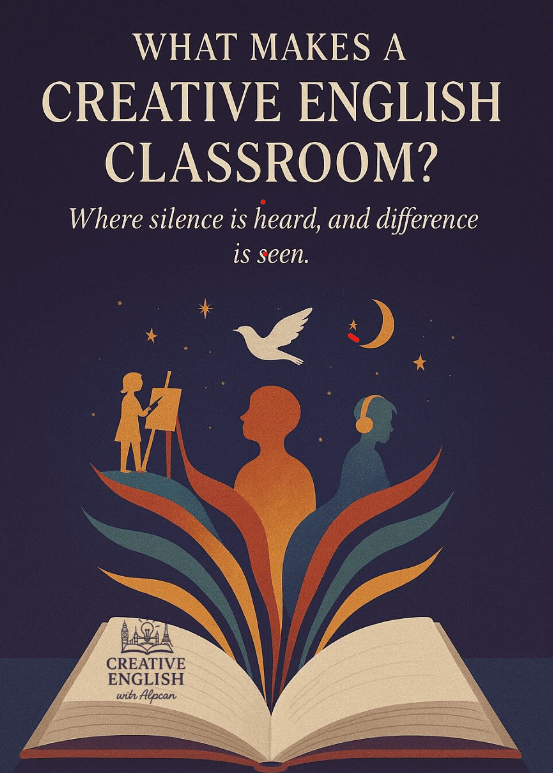
A creative English classroom isn’t defined by how colorful the posters are or how loud the games get. Instead, it’s a space where students feel safe to imagine, explore, and express themselves—without the fear of being wrong. Creativity in language learning is not just an add-on; it’s the bridge between knowledge and connection.
Here are six core features that make an English classroom truly creative:
1. Freedom to Express
In creative classrooms, students aren’t afraid to share. Whether through drawing, movement, storytelling, or simply silence, every form of expression is accepted.
- Use open-ended activities and projects
- Encourage students to take ownership of their ideas
- Value creativity over perfection
2. Student Voice Matters
Creativity thrives when learners feel heard. Invite students into the planning process:
- Let them suggest story ideas or topics
- Offer choices in tasks or roles
- Give them space to reflect, respond, and lead
When students co-create the learning experience, they naturally become more engaged and empowered.
3. Learning Feels Like Play
Play is not a break from learning—it’s a powerful tool for learning.
- Use games, challenges, and simulations
- Turn grammar into storytelling
- Bring in humor, surprise, and fantasy
When the classroom feels like a stage, a lab, or a playground, language comes alive.
4. Mistakes Are Welcome
In a creative classroom, mistakes aren’t punished—they’re prized.
- Normalize risk-taking
- Laugh together at funny errors
- Reflect on “productive mistakes” as learning tools
This shifts students away from fear and toward growth.
5. Creativity Lives in the Details
It’s not just about the activity—it’s about the atmosphere.
- Bring metaphor, color, and emotion into lessons
- Use unexpected prompts (What would you say to a dragon?)
- Encourage students to remix content into poems, songs, or comics
Small creative twists can make even the simplest task memorable.
6. Inclusivity Fuels Creativity
Creative classrooms are inclusive by nature.
- Offer flexible ways to participate (writing, drawing, speaking, acting, etc.)
- Respect different processing speeds and sensory needs
- Celebrate diverse learning styles and strengths
When students feel safe and seen, creativity follows.
Final Thought
A creative classroom doesn’t always look “busy”—sometimes, it’s in the quiet moments, the thoughtful pauses, or the spontaneous laughter that creativity shows up. What matters is that students feel invited—to imagine, to make mistakes, and to speak in their own way.
 Creative English With Alpcan