
1. They Observe Deeply
Introverted students may not be the first to answer questions, but their eyes follow everything. They notice details others often miss.
How to support them:
✅ Ask open-ended questions in 1:1 chats
✅ Give them space to process before speaking
2. They Express Through Writing or Art
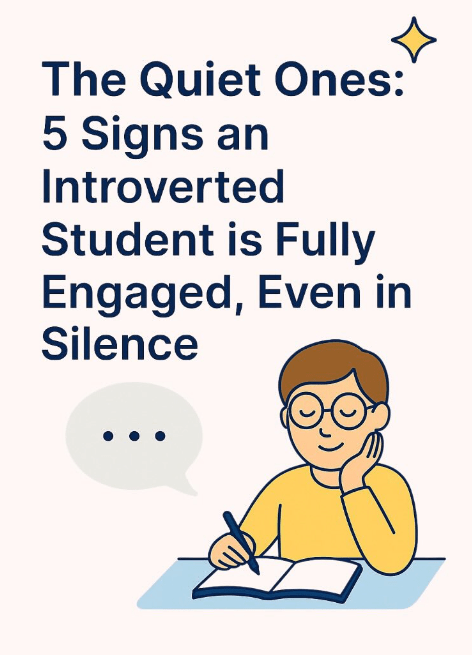
Many introverted students prefer to express their thoughts through writing, drawing, or organizing their ideas visually. Expression happens on paper—not in noise.
How to support them:
✅ Include creative outlets in your lessons
✅ Use written reflections instead of oral answers
3. They Participate with Nonverbal Cues
Subtle signs like nodding, leaning in, or quiet smiles show that they’re engaged. For some, eye contact and body language replace words.
How to support them:
✅ Acknowledge their nonverbal responses
✅ Provide time and space for observing
4. They Excel During Independent Work
Introverted students often shine during solo tasks. They stay focused, use the full time, and show visible progress.
How to support them:
✅ Offer meaningful individual tasks
✅ Appreciate visible progress and effort
5. They Might Arrive Early or Stay After Class
Quiet times—before or after the class rush—can feel safest. Some introverted students use these moments to connect in their own way.
How to support them:
✅ Greet them personally
✅ Use this time for casual encouragement
✅ Let them help with prep—it builds trust and confidence
💡 In Conclusion
While they may not speak up as often, introverted students can still express themselves through quieter forms of engagement. Look for these positive indicators—they matter.
 Creative English With Alpcan