
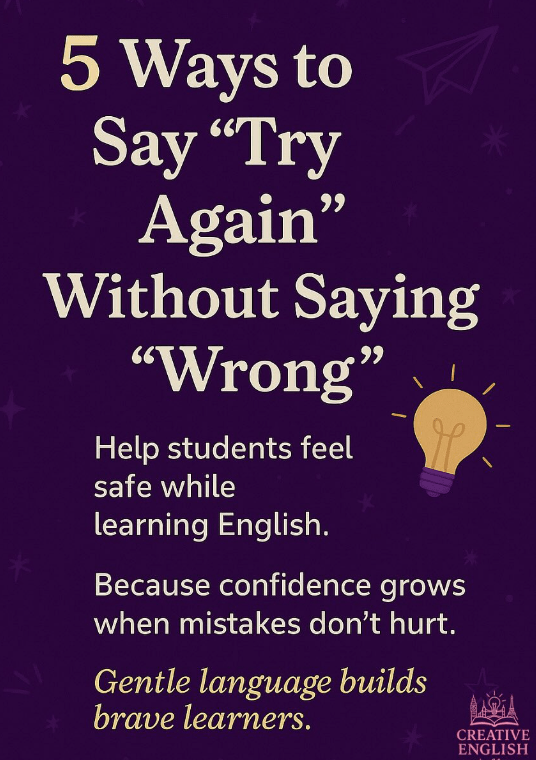
Because gentle language builds brave learners.
In creative classrooms, every word a teacher uses matters. The way we respond to mistakes can either build a student up—or shut them down.
For students learning English, especially those who struggle with confidence, a simple phrase like “No, that’s wrong” can feel discouraging or even humiliating.
But what if we could say the same thing… in a gentler way?
Why It Matters
Language learners are already vulnerable. They’re navigating grammar, pronunciation, performance, and peer pressure—all at once.
When mistakes are met with abrupt correction, students may:
❌ Withdraw from participation
❌ Develop speaking anxiety
❌ Avoid taking creative risks
But when we reframe corrections with care, something shifts:
✅ Students feel safe to try again
✅ Learning becomes playful, not painful
✅ Mistakes become part of growth, not a source of shame
💬 Try Saying This Instead of “Wrong”:
- “Almost! Let’s tweak it a bit.”
- “You’re on the right track. Try this next.”
- “Hmm, close! What else could it be?”
- “Nice guess. Let’s look again together.”
- “I see what you mean. Let’s build on that.”
These phrases validate effort while gently guiding the learner toward the correct form—without shutting them down.
Final Reflection
Students won’t remember every grammar rule.
But they’ll remember how we made them feel when they got it wrong.
If we want students to be bold, creative, and expressive in English, we must first give them a soft landing when they fall.
💡 Because gentle language builds brave learners.
 Creative English With Alpcan