
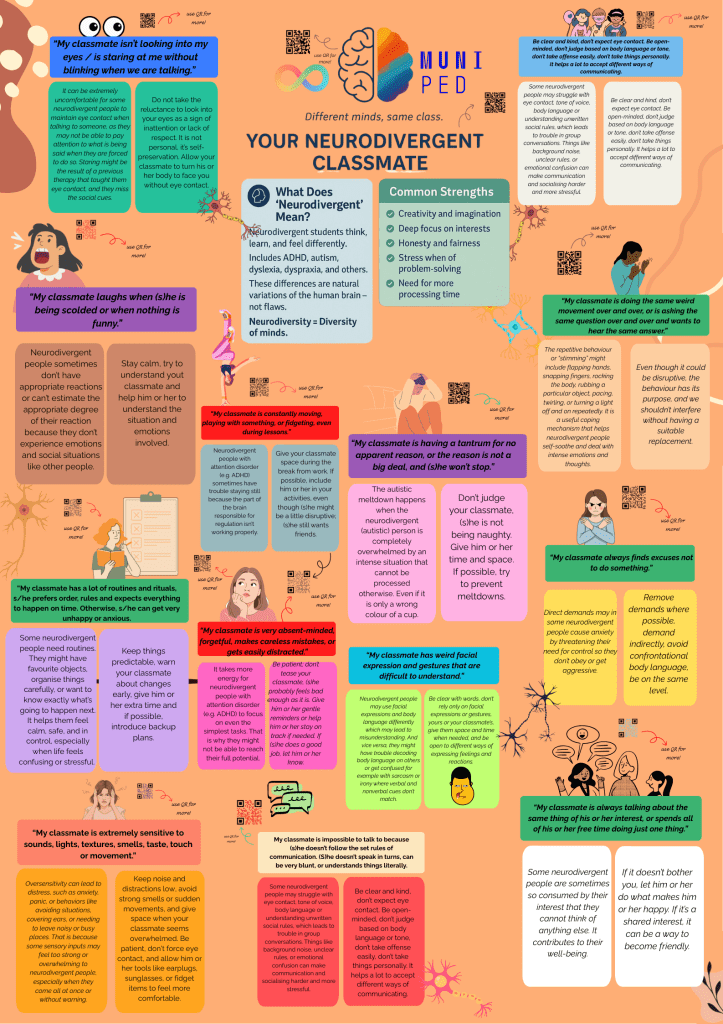
School is a place where dozens of different minds share the same space. Some students think, learn, and feel in ways that might seem confusing or unexpected to others. These differences aren’t “problems”—they are simply the natural variation of the human brain.
If you’ve ever wondered why one classmate avoids eye contact, another repeats movements, or someone else seems overwhelmed by noise, this guide will help you understand what’s going on beneath the surface.
Let’s explore the most common signs of neurodivergence in the classroom—and what they really mean.
🌈 Neurodivergence: Different Minds, Same Classroom
🔁 2. Repetitive Movements (“Stimming”)
🌪 3. Meltdowns
😅 5. Exaggerated Emotional Reactions
⭐ 6. Obsessive or Deeply Focused Interests
📏 8. Rigid Routines and Need for Predictability
🗣 9. Trouble With Social Cues or Small Talk
🧍 10. Unusual Body Language or Vocal Tone
⚡ 12. ADHD: Short Attention Span
🎯 14. Hyperfocus
16. Masking
 Creative English With Alpcan